阿诗铃是一座你永远到不了的城市。它只会在落日或日出时向世俗的人们敞开前往她怀抱的大道。那是一片温柔的粉黛海。鱼鳞般的粉由海及空,次第衰减。只有在粉色的浪花兴风作浪,拍打乳白色的环礁直到白色沙滩上的客人站不住脚时,一叶纸片一般的扁平二维小舟才悠悠从粉色的屏风间隙里荡出,但只有当你双目睁大目不转睛,这船才能朝你前进。不知过了何许时间,当你的眼睛已经酸涩肿胀时,那小船终于浮至眼前,撑舟人原先是一直背对着客人们,此时猛一回头。你绝对认识那人,他或她同时拥有数个不同的名字,因为那张脸属于每个外来者内心最依赖的人。露出你熟悉的笑容,当客人们恢复意识时,已经随之上了这无桨之船,晃荡于粉黛浪中。靠近了,那座桥。当你踏上桥板,才发现那粉黛海与舟早已无踪无迹,取而代之的是迷雾与其下雷鸣般深不见底的瀑布。心悸之余,目光向前,桥头空无一物,只有一条由青色巨石堆砌而成的横向的小路,左右铺开。无论随意选择哪一个方向前进,客人们都会意识到这路逐渐在向低处延展。石上青苔变的湿滑伸出棕红色的苔花,渐渐有冰凉刺骨的流水没过脚背,水流声响轰击着客人们的耳膜,直到恐惧挣脱弦,客人们惊恐万分,想要返回时,路却在他们脚跟后消失的一干二净。硬着头皮向前,水将客人们逐一吞没,奇怪的是,明明是在水中,脚还能够粘附在道路上迈进。进入某座地下溶洞,在冰凉与黑暗中,他们没有停止行走。不知过了多长时间,也不知是谁,察觉到脚下的异样,那路已转向上方延伸。
终于,经历辛劳的长徒跋涉,光亮与空气刺激了客人们的感官,他们瞳孔松弛,窒息般被眼前的景象所震撼。那是一座与其外貌不相符的奇异之城。你可以说建筑风格仿佛是某个东欧国家的市中心,晴朗的天空中却怪异的交织着电闪雷鸣。客人们耳鬓的碎发被四处窜流的气柱倒吹,面上扣着刻有古老花纹装饰的腐朽的面具的骑士架马迎面冲向外来者,却从被威压震慑到瘫软在地的人们面前纵马一越,臂膀划出一条优美的弧线,将手中枯枝投入前方奔逃者的胸膛中。前方大路上一块碎石尖细地叫着自己老了,腰很痛。霎时间,礼乐响起,不知从哪个旮旯角落涌出脸庞上洋溢着一模一样笑容的无数小童,口中发出只属于婴儿天真无邪的笑声,在吵吵闹闹中推搡着客人向前走。石头留下自己的抱怨后被踢飞,而那些没能及时爬起的不幸的人们则被小童的千斤重量压至扁平。余下的客人像是醒悟了一般,疯狂奔逃至一处海边才有的溶洞中,紧缩一团瑟瑟发抖。小童间不言一词,熟练地将适合铸造的红土倒实溶洞,在特地留下的缝隙里注入沸腾的液体金属,等待冷却打磨后,举行盛大的欢庆仪式,将这尊栩栩如生的塑像恰当地摆放在柔软的沙质泥床上,并精细地依据每一个人的神态调整摆放的角度。借着点着的火把,有无数从眼珠中反射出来的光茫,在黑暗中熠熠生辉,小童看着自己的艺术品,满意地咂巴几下自己的嘴。在某一时刻之前,客人们就已经是死人了。没有人还能记得那天暴风雨中沉没的渔船。总之没人能够到达阿诗玲,没有人。
English translation with assistance from GPT.
Ashiling is a city you will never reach. Only at sunrise or sunset does it open a road into her embrace for the people of the mortal world. There lies a gentle sea of powdery pink. Scales of pink, like those of a fish, spread from sea to sky, fading gradually from one to the next. Only when the pink waves rise in a frenzy, battering the milky-white atoll until the visitors on the white sandy beach can no longer keep their footing, does a little boat, as flat and two-dimensional as a sheet of paper, drift leisurely out through a gap in the pink screens. Yet the boat will approach you only if you keep your eyes wide open and your gaze unwavering. Who knows how much time passes? By the time your eyes have grown sore and swollen, the little boat finally floats before you. The boatman, who has kept their back turned to the visitors all along, suddenly turns around. You know this person without a doubt. He or she possesses several different names at once, for that face belongs to the person on whom each visitor depends most deeply. The boatman smiles a smile you know well. By the time the visitors regain their awareness, they have already boarded the oarless boat and are swaying among the powder-pink waves. At last, the bridge draws near. But the moment you step onto its planks, you discover that the pink sea and the boat have vanished without a trace. In their place are mist and, far below it, a thunderous waterfall whose depths cannot be seen. Your heart pounding, you look ahead. There is nothing at the far end of the bridge but a narrow path running across it, built of enormous blue-green stones and stretching away to the left and right. Whichever direction the visitors choose, they soon realize that the path is gradually descending. The moss on the stones becomes slippery and sends up reddish-brown moss flowers. Gradually, icy water rises over the tops of their feet. The roar of the current pounds against their eardrums, until fear finally snaps its restraints. Terrified, the visitors turn to retreat, only to find that the path has vanished completely behind their heels. With no choice but to press forward, they are swallowed by the water one after another. Strangely, although they are submerged, their feet can still cling to the path and continue walking. They enter an underground limestone cavern, and in the cold and darkness, they do not stop. No one knows how much time has passed, or who first notices the change beneath their feet. The path has turned upward.
At last, after their arduous journey, light and air strike the visitors' senses. Their pupils dilate, and they are struck almost breathless by the sight before them. It is a strange city, utterly unlike what its outward appearance would suggest. You might say that its architecture resembles the city center of some Eastern European country, yet lightning and thunder are strangely interwoven across the clear sky. Columns of air rushing in every direction blow the loose strands of hair at the visitors' temples backward. Knights wearing decaying masks engraved with ancient patterns charge toward the newcomers on horseback. Yet just as the visitors collapse to the ground beneath their overwhelming presence, the riders leap over them. With a graceful sweep of an arm, one knight hurls the withered branch in his hand into the chest of someone fleeing ahead. On the road before them, a fragment of stone shrieks in a thin voice that it is old and that its back hurts. In an instant, ceremonial music begins to play. From who knows what obscure corners, countless little children emerge, their faces beaming with identical smiles. They let out the innocent, guileless laughter of infants, pushing and jostling the visitors forward amid the clamor. Having voiced its complaint, the stone is kicked away, while those unfortunate visitors who fail to rise in time are flattened beneath the immense weight of the children. The remaining visitors, as though suddenly coming to their senses, flee madly into a cavern of the kind found along the seashore, where they huddle together, trembling. Without exchanging a word, the children deftly pack the cavern with red clay suitable for casting. Through gaps deliberately left open, they pour boiling liquid metal. Once it has cooled and been polished, they hold a grand celebration, placing the lifelike sculpture in a fitting position upon a soft bed of sandy mud. With meticulous care, they adjust its angle according to each person's expression. By the light of burning torches, countless glimmers reflected from eyeballs shine brilliantly in the darkness. The children regard their work of art and smack their lips a few times in satisfaction. By some point before all this, the visitors were already dead. No one can remember the fishing boat that sank in the storm that day. In any case, no one can reach Ashiling. No one.
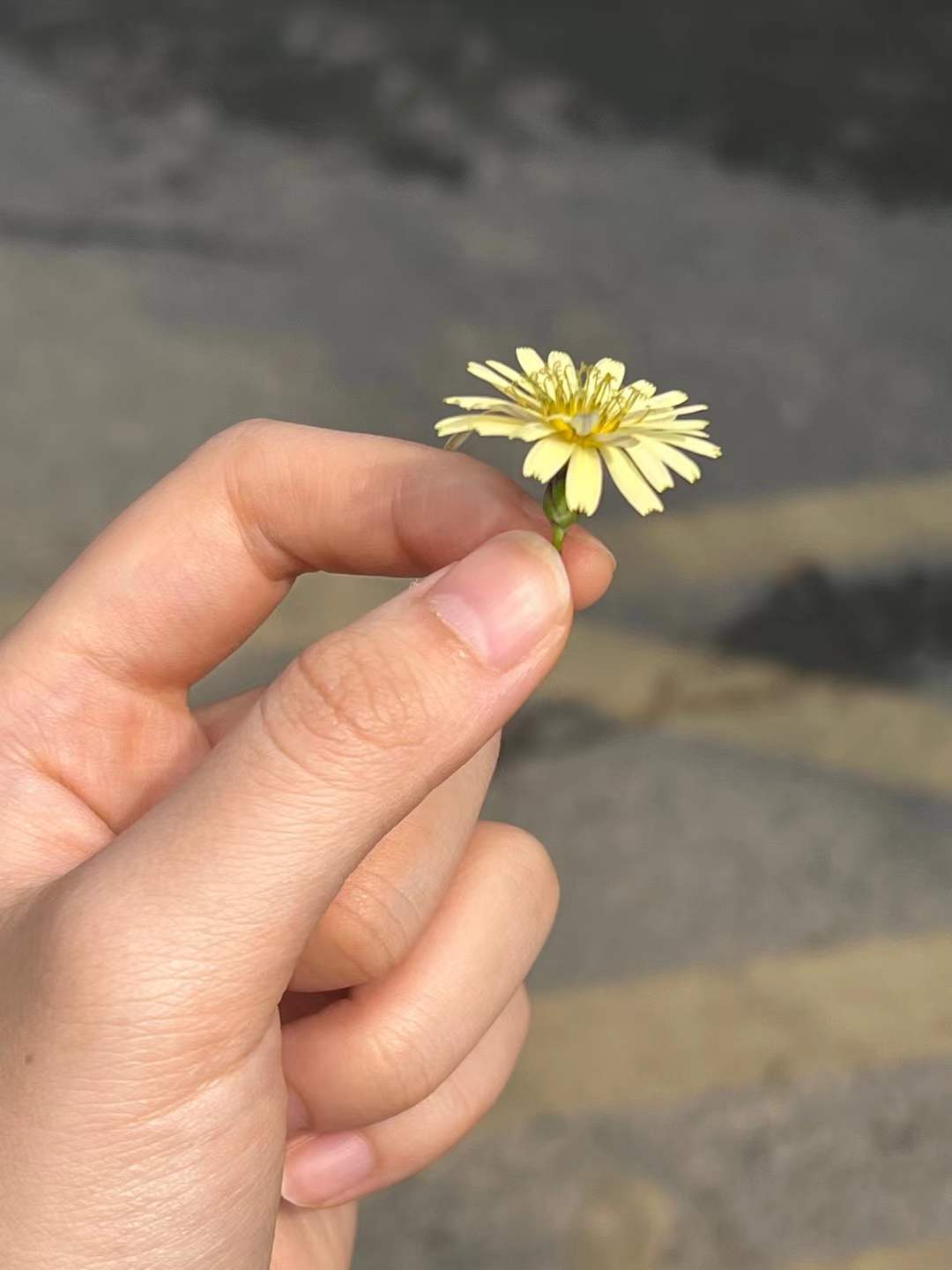
- Subject
- A Little Yellow Flower
- Reference
- The little yellow flower mentioned by Professor Jianfei Zhang
- Author's Note
I wrote Ashiling for Western Literary Classics Reading, a course taught by Professor Jianfei Zhang at Wuhan University. Her scholarship explores the relationships between literature, landscape, and plants, with particular attention to how unfamiliar we have become with the natural world around us. In class, we read Dino Buzzati's The Tartar Steppe and Italo Calvino's Invisible Cities, exploring the strangeness of cities and the ways we perceive them.
I still remember posting a photograph of a little yellow flower in October 2022. Professor Zhang identified it as 翅果菊 (Lactuca indica) and jokingly reminded me that plants have names of their own. That small exchange stayed with me. I began paying closer attention to botanical names and, eventually, to the relationship between names and the things they represent.