书架的角落里有一枚松塔。
褐色的它静静地躺在贝壳、蝴蝶结丝带、埃菲尔铁塔和天气风暴瓶之间。灰尘让它失去了松树母亲赋予它的木质光泽,脉络上蒙了一层翳。几何形状的瓣壳内空无一物,原本的房客不知何时已经离去,实际上,我从未找到过带有松籽的松塔;或许,在触地之前,它们就已随风飘扬而去。
直到后来,我才明白这枚松塔来自一颗油松,那种在奶奶家周围漫山遍野生长的树种。山区的土壤,由页岩构成,表面覆盖着厚重的黏土,缺乏腐殖质和水分,唯有坚韧的松树能够在这样的环境中顽强生长,占据主流。无论是寒冬还是酷暑,油松总是呈现出勃勃生机的翠绿,针叶表面那闪闪发光的蜡质层,尖锐的末梢在微风中轻轻摇曳,似乎诉说着它们亘古不变的故事。春天,它们在温暖的阳光照耀下,绽放出高高的浅黄色花束,轻触即散发出缕缕黄色细粉,我常幻想用这些松花粉来制作诱人的牛皮糖。秋天,林下干燥的松针被爷爷用钉耙拢在一起,堆成一堆,作为冬天烧锅的引火草,因此在饭香与氤氲的水汽里总会透着松脂的熏香。我则幻想着用这些松针作为鸟巢的材料,细心地收集干净的松针回家。我家门前,有一颗与我同龄的小樟树。我总希望有一天,它能吸引一对快乐的鸟儿来此筑巢,使用我收集的松针,让我有机会近距离观察它们的生活。
在奶奶家后山,松塔自由地散布,像散文中的句子般随处可见。那些完成了生命繁衍使命的松塔,会从树梢的家园静静坠落,结束它们空中的漂泊。在我眼中,这些松塔各有其命运:有的融了泥巴已经大半腐烂,开始了另一种形式的生命;有的在老牛不经意的踏步下破碎;有的被松油白色的泪痕所覆盖,捡起时还带着虫蚀的证据——所有这些都无法抵抗它们回归自然的决心。
然而,某次,我偶遇了一枚异常巨大且完美无瑕的松塔,它的干净和匀称让人赞叹,像是从未被风雨触及,仍然在树梢上俯瞰着远方的世界,保持着它诞生时的纯净与美好。这一刻被我捕捉,并分享到社交媒体上,意外地引发了我们这群看热闹初中生们的好奇和讨论。这枚松塔成为了同龄人之间交流的共同话题,让我们之间的对话充满了轻松和欢笑。我也把这枚独一无二的松塔带回了家,让它成为那段难忘时光和深厚友谊的静默见证。
山区的生命充满了野性,植物仿佛都带有某种敌意,生怕你夺走它们什么。那里的草叶不是柔软多汁的,而是矮小的尖锐的粗糙的,只有穿着厚裤子,你才敢于在这野性的毯子上安坐;老鸦瓣在山野崎岖的缝隙中顽强生长,它那柔弱的花苞穿透枯叶和土块,宣告着冬日的结束;而匍匐的野蔷薇,尽管用倒钩保护着新生的刺苔,却仍旧抵挡不住孩子们探寻的手,被剥去表皮,送入期待的口中。
夏夜,成群的蚊虫与炎热被大人们挥动的蒲扇轻轻驱散。我们躺在凉爽的屋顶上,望着那火红的夕阳慢慢沉没于深邃、浩瀚的松林之中,不觉间沉沉睡去;到了腊月,我们换上胶鞋,在山坳浅洼踢冰嬉戏,带着忠诚的狗儿探险穿林越岭,越过道道坝梗,冒着热汗的我们仿佛走了很远,山对面的狗在对我们狂吠,护卫着身后的养猪棚。
随着求学的脚步,我离开了那片熟悉的松林,远离了陪伴我成长的小樟树,带着松塔搬进了城中村,但我与自然的联系从未断裂。我还是和楼下的动物植物关系要好,也常常回到奶奶家,在阳光洒满的硬草坡上打盹,或与堂兄妹们在收割后遗留的稻草堆中欢笑追逐,直至手脚衣领粘满了刺挠但带着阳光幸福味道的草叶碎屑。松林依旧,岁月未变,唯有我们从孩童成长为青年,变得洁净、矜持,似乎与那片松林的距离也悄然拉远。
随着时间的流逝,日益加快的生活节奏和不断堆积的疲惫,在那由钢筋混凝土构成的冰冷空间中显得尤为凸显。每当夜色渐浓,那摆放在床头的松塔就成了我的慰藉,它仿佛带着远方松林的召唤,引领我重返那片阳光斑驳、松针覆盖的土地。凝视松塔之时,我似乎能再次感受到脚下松针带来的弹性,抬头望着树梢缝隙间露下的闪烁阳光,以及扑面而来的山野清香。
然而,这样的回忆与思念往往只是转瞬即逝。面对着松塔的默默诉说,我通常只能给出模棱两可的回应,随后匆匆投入梦乡,任由那些迷茫与忧郁的梦境填满心头。在我们的青春岁月中,同学们之间的联系充满了热烈和活力,我们通过社交媒体分享彼此的故事和梦想,讨论声此起彼伏,仿佛时间和空间都无法割裂我们的友情。然而,随着时间的流逝,每个人都走上了各自不同的生活轨迹,那些曾经热烈的在线讨论逐渐稀少,直至消失,热闹不再,每个人的生活似乎都被各种忙碌和责任所填满。生活中似乎总有那么多更加重要的事务需要处理,而那条回归的通往自然的路,似乎早已无人问津。
偶尔,我会想念那个被遗忘的老屋,好奇那棵与我年岁相仿的小樟树是否已经沦为疯长野草的牺牲品。一次短暂的归途中,我惊喜地发现,小樟树已经茁壮成长,与我记忆中那株弱不禁风的幼苗大相径庭。无人照料,它不仅高度激增,枝叶也愈发繁茂。风过林梢,它发出成熟大树特有的沙沙声。我抬头仰望,用手触摸它的树皮,感受到下面蓄满的水分和营养正源源不断地往上输送。时隔多年,有些愧疚的我试图与它重新建立联系,想要得到它的欢心。但回到城里,我又很快把它置之脑后。
关于拆迁的消息已经不是新闻,但在高考的压力下,我无暇他顾。对我而言,居住的地点似乎没那么重要。尽管已有柏油路铺设,但每次回到奶奶家的山路依旧漫长,即便乘坐大巴,也需要在蜿蜒的山路上颠簸一个多小时。老旧的平房显露出将坍的征兆,被褥里常住跳蚤,而饮用水水还得从远处挑回,那黄色浑浊的井水需要经过明矾处理后才能使用。也许,拆迁真的能给生活带来改善。面对这一切不变的现实,我内心竟有些期待那一天的到来。我渴望见证那些根深蒂固的事物是否能随着新的决策而改变,希望这场变革能为我平淡无奇的生活带来一丝新鲜感和不可思议的震撼。
一切都发生了,一部分正如我预期,而另一部分却出乎意料。
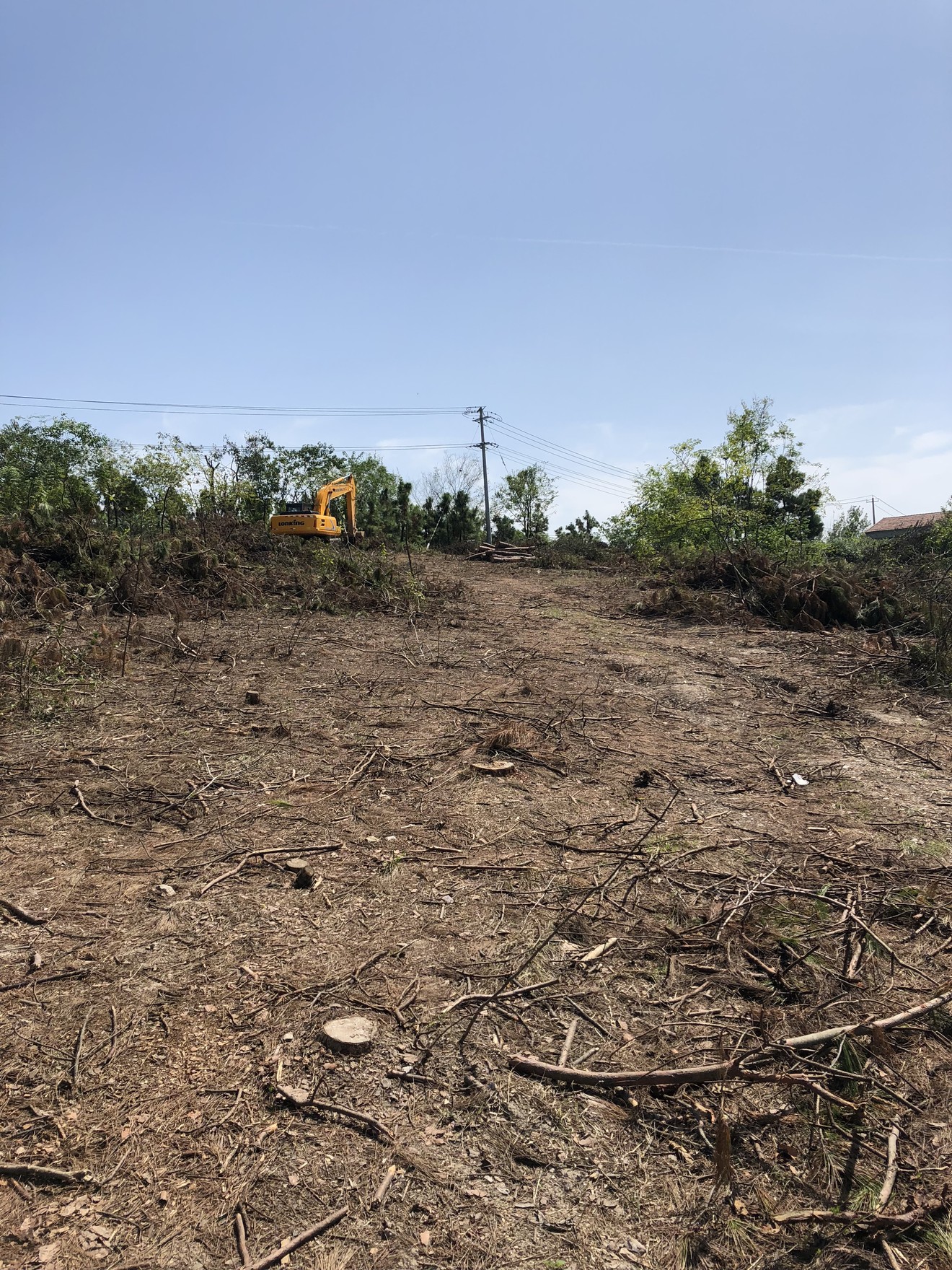
- Subject
- The Disappeared Pine Grove
- Detail
- A bulldozer at the site
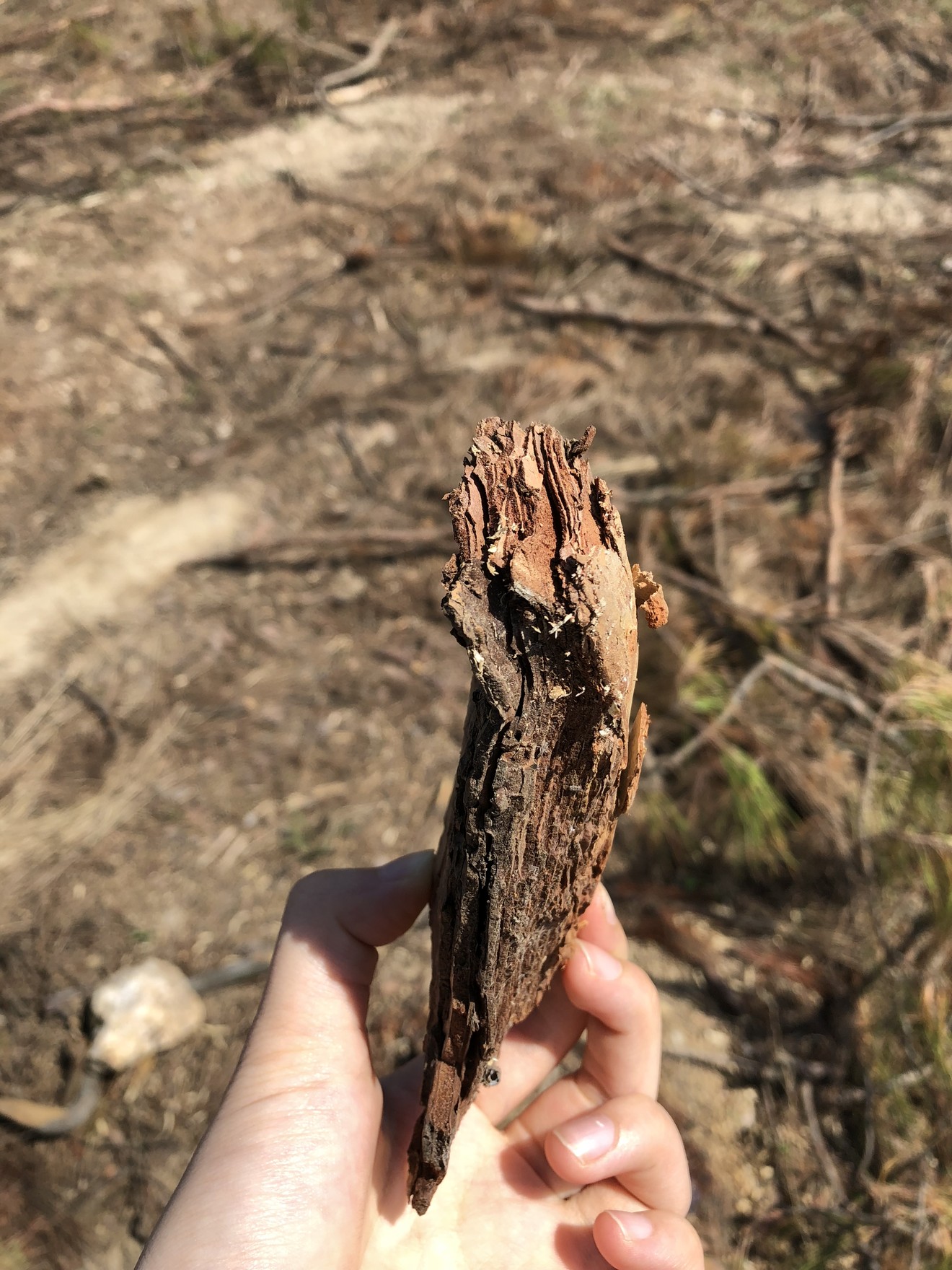
- Subject
- Pine Tree Fragments
我站在坚硬的起伏的褐土坡上,阵阵热风扫过我的面庞,金黄的阳光不再温和的闪烁,而是贪婪地夺走了一切水汽,使得裸露的泥巴边缘变得更加干硬、尖锐,脚下的感觉不再像云朵那样轻盈。曾经漫山遍野的松林被漫山遍野的翻滚的土浪所替代,不远处,断裂的树根横陈在僵硬的泥土之中,处处散落着还未来得及装车的松枝,它们流淌着松油,粘凝着蜷曲的木屑。而惯于居高远眺的针叶冻在土里,偶尔露出零星的绿色点缀中弥漫着浓烈的松香,仿佛在哭喊。往日那些布满小小粉白色老鸦瓣的硬草地,如今也被无情的钢铁履带蹂躏、翻转。山洼水池也被深挖,岩体上一道道挖掘臂造成的的划痕里暴露出白色的碎裂页岩,而渗出的青蓝色积水异常清澈。
我顺着山势,无目的地漫步,试图在这变化之地找回我梦中走过无数次的路径。四周一片死寂,没有了松树的掩护,对面山头的房屋清晰可辨,虽然不过是寥寥几间破旧之屋。忽然一声狗吠,我抬头望去,在刺目的阳光下,那影子似乎是养猪场的狗挣脱了束缚,划拉着半截铁链,依旧出于护卫的本能呲牙咧嘴朝我扑咬,我惊慌失措,隐隐约约中听得见了卖这些松树得了几多钱,但只顾着仓皇逃跑,在大人的招呼中跌跌撞撞地坐上汽车,回到城里的巢。
是我一直盼望的结果了。村里的人们见此景象,无不喜形于色。出于一种难以言述的心理,似乎只有我觉得怅然若失,意识到原来填满我童年的的松林海不过是一片可以轻易复制、粘贴的经济林。当它那层被神秘与永恒所包裹的自然面纱被揭开,其价值便仅仅被量化为重量和单价。我也像被铲除了与土地粘连在一起的纽带似的,我那熟悉的山水、花鸟都已无处可寻,充盈的童年的记忆似乎也随之模糊。我只好同大家一样默默走进钢筋丛林的世界,而那些曾供我捡拾的松塔,则再无踪影。也许我也只是一片经济林里的一颗油松。
奶奶家搬进了小樟树旁的老屋,有了人的照料,我对它的未来更加安心。每逢春节回家,总能见到它比去年更加粗壮。有时,它的身上被钉上钉子,用以晾晒咸鱼和咸肉;有时,它低矮的枝条上挂着用铁钩子吊着的竹篮。但这些都不重要,重要的是人会清除那些无用且讨嫌的杂草,它在人气的照拂下越长越快,已经高过屋子很多了。我也离家去外地上了大学,在新的土地建立了新的联系,回家的次数越来越少,但我始终坚信,故乡有那么一棵树,它陪我成长,在替我默默守护着我的记忆,维护着我成长存在过的痕迹。
上一个春节,我回家时,我依旧见到了樟树,只是我看到的是樟树的木桩。浇筑在水泥中二十年的树木木桩居然是这样的大,与陈旧记忆中的小树苗纤弱颤抖的主干截然不同。同样的,这次,同样的,我也并未过多表达我的感情,因为我明白无论我发出什么音节,那都将是会被大人称为不成熟的“幼稚”与“叛逆”的话柄,现在的我,已经理解了徒劳的意义,不愿再为此耗费精力。我只是顺从地蹲在了那一小堆发黑、干枯、还未劈完的樟树枝旁边,不怎么说话,只是附和着大人们的热情的客套“晒干了好烧锅”,眯着眼睛继续凝视着我的这位被我单方面缔约的朋友,嗅着它残存的干巴的树枝里散发出的樟脑味。
后来,书架上的松塔旁新增了两根切口粗糙的樟树枝。
在这一切变迁之中,我失去的远不止是那片覆盖着树根与草皮的土地,更是那些曾证明我在此生活过的所有痕迹。我的童年与青春,就这样随着这片土地的改变而告终。世俗之物与永恒的本质似乎从未相交,时间的流逝不会因任何个人的努力挽留而迟缓,那些曾属于童年的人和事,只能在我们心中留下深刻的印记。我将像断线的风筝一样融入茫茫的人海,只有在深深的梦里,松塔才能同樟树枝一起,引领我一次又一次回到那个已经无法触及的故乡。
English translation with assistance from GPT.
In a corner of the bookshelf lies a pinecone.
Brown and still, it rests among seashells, ribbon bows, a miniature Eiffel Tower, and a storm glass. Dust has robbed it of the woody sheen bestowed upon it by its mother pine, leaving a hazy film over the veins of its scales. The geometrically arranged chambers beneath the scales are empty. Their former occupants departed long ago, though in truth I have never found a pinecone with seeds still inside. Perhaps they had already drifted away on the wind before the cone touched the ground.
It was only later that I learned this pinecone came from a Chinese pine, Pinus tabuliformis, the species that covered the mountains surrounding my grandmother’s home. The mountain soil, formed from shale and covered with a thick layer of clay, was poor in humus and moisture. Only the hardy pines could grow so vigorously in such conditions, becoming the dominant trees across the landscape. Through bitter winters and scorching summers, the Chinese pines remained a vibrant green. Their needles, coated in a glistening layer of wax, swayed gently in the breeze, their pointed tips seeming to tell stories unchanged since time immemorial. In spring, under the warm sunlight, tall clusters of pale yellow flowers emerged among their branches. At the slightest touch, they released fine clouds of yellow pollen, and I often imagined using it to make delicious niupi tang, a chewy Chinese candy. In autumn, my grandfather would gather the dry pine needles from the forest floor with a rake, piling them up to use as kindling for the cooking fire in winter. And so the scent of pine resin always mingled with the aroma of food and the rising steam. I, meanwhile, imagined using those needles as nesting material for birds, and carefully collected clean ones to take home. Outside our front door stood a little camphor tree, about the same age as I was. I always hoped that one day it would attract a happy pair of birds to build a nest in its branches, using the pine needles I had gathered, so that I might observe their lives up close.
On the mountain behind my grandmother’s house, pinecones lay everywhere, as common as sentences in a piece of prose. Having fulfilled their role in the continuation of life, they would fall quietly from their homes in the treetops, bringing their wanderings through the air to an end. In my eyes, each pinecone had its own fate. Some had sunk into the mud and mostly decayed, beginning another form of life. Others had been crushed beneath the unwitting hooves of an old ox. Still others were covered in white, tear-like traces of pine resin, and bore signs of insect damage when picked up. Yet none of this could shake their resolve to return to the earth.
One day, I happened upon an unusually large and flawless pinecone. Its cleanliness and symmetry were astonishing. It looked as though wind and rain had never touched it, as though it were still high in the treetops, looking out over the distant world, preserving the purity and beauty of the moment it came into being. I captured the moment in a photograph and shared it on social media, unexpectedly sparking curiosity and discussion among our group of middle schoolers, who were always eager to join in the excitement. The pinecone became a common subject of conversation among my peers, filling our exchanges with ease and laughter. I brought this one-of-a-kind pinecone home, making it a silent witness to those unforgettable days and the deep friendships we had formed.
Life in the mountains was full of wildness. The plants seemed almost hostile, as though afraid you might take something from them. The grasses were not soft or succulent, but short, sharp, and rough. Only in thick trousers would you dare sit upon that wild carpet. Amana edulis, a small wildflower, grew tenaciously in the rugged crevices of the hills, its delicate buds pushing through dead leaves and clods of earth to announce the end of winter. Creeping wild roses, meanwhile, protected their tender new shoots with hooked thorns, yet even these could not deter the searching hands of children, who would peel away the outer skin and eagerly put the shoots into their mouths.
On summer nights, the adults gently waved palm-leaf fans to drive away the mosquitoes and the heat. We lay on the cool rooftop, watching the fiery red sun sink slowly into the deep, vast pine forest, until we drifted off to sleep without noticing. In the twelfth lunar month, we changed into rubber boots and kicked at the ice in the shallow hollows of the hills for fun. With our faithful dog beside us, we ventured through the forests and across the mountains, crossing one field embankment after another. Sweating from our adventures, we felt as though we had traveled a great distance. Across the mountain, another dog barked furiously at us, guarding the pigsty behind it.
As my schooling took me farther away, I left the familiar pine forest and the little camphor tree that had accompanied my childhood. Carrying the pinecone with me, I moved into an urban village, a former village swallowed by the city, but my connection with nature was never severed. I remained on good terms with the plants and animals downstairs, and often returned to my grandmother’s home to nap on the sunlit slopes of tough grass, or to chase my cousins through the piles of straw left behind after the rice harvest. We played until our hands, feet, and collars were covered in itchy fragments of straw that carried the happy scent of sunshine. The pine forest remained, and the years seemed unchanged. Only we had grown from children into young adults, growing tidier and more reserved, as though the distance between us and the forest had quietly widened.
Over the years, the accelerating pace of life and the accumulation of fatigue became all the more pronounced within the cold spaces of concrete and steel. Whenever night drew near, the pinecone beside my bed became a source of comfort. It seemed to carry a call from the distant forest, leading me back to that land of dappled sunlight and fallen pine needles. Gazing at it, I could almost feel again the springiness of pine needles beneath my feet, see sunlight flickering through the gaps in the canopy above, and breathe in the fresh fragrance of the mountains.
But such memories and longing were often fleeting. Faced with the pinecone’s silent stories, I could usually offer only an ambiguous response before hurrying off to sleep, allowing dreams filled with confusion and melancholy to occupy my mind. During our adolescence, the connections among my classmates were full of warmth and vitality. We shared our stories and dreams on social media, our conversations rising and falling around us, as though neither time nor distance could divide our friendships. As the years went by, however, everyone followed a different path in life. The once-lively online discussions gradually grew fewer, until they disappeared altogether. The bustle was gone, and everyone’s life seemed filled with work, responsibilities, and endless things to attend to. There always seemed to be so many more important matters to deal with, while the path leading back to nature had long since been forgotten.
Occasionally, I would miss the old house we had left behind and wonder whether the little camphor tree, almost exactly my age, had fallen victim to the weeds growing unchecked around it. During one brief return, I was delighted to discover that the tree had grown strong and tall, bearing little resemblance to the frail sapling in my memory. Even without anyone tending to it, it had shot upward, its branches and leaves growing ever more luxuriant. When the wind passed through its crown, it made the distinctive rustling sound of a mature tree. I looked up and touched its bark, sensing the water and nutrients stored beneath it being carried steadily upward. After so many years, I felt a little guilty and tried to renew our connection, hoping to win its affection. But once I returned to the city, I soon forgot about it again.
News of the impending demolition and relocation was nothing new, but under the pressure of preparing for the gaokao, China’s national college entrance examination, I had little attention to spare for anything else. To me, where we lived did not seem particularly important. Although asphalt roads had already been laid, the journey to my grandmother’s house remained long. Even by bus, it took more than an hour of jolting along winding mountain roads. The old single-story house showed signs of impending collapse. Fleas were regular inhabitants of our bedding, and drinking water still had to be carried from a distant well. The yellow, muddy water needed to be treated with alum before it could be used. Perhaps relocation really would improve our lives. Faced with these seemingly unchanging circumstances, I found myself, to my own surprise, looking forward to that day. I wanted to see whether things so deeply rooted could be changed by new decisions, and hoped that this transformation might bring a touch of novelty and some unimaginable astonishment into my otherwise uneventful life.
Everything happened. Some of it unfolded just as I had expected, while the rest took me by surprise.
- Subject
- The Disappeared Pine Grove
- Detail
- A bulldozer at the site
- Subject
- Pine Tree Fragments
I stood on a hard, uneven slope of brown earth, waves of hot wind sweeping across my face. The golden sunlight no longer flickered gently, but greedily drew every trace of moisture from the ground, leaving the edges of the exposed soil harder and sharper. Beneath my feet, the earth no longer felt as soft as clouds. The pine forest that had once covered the mountains had been replaced by rolling waves of overturned soil. Not far away, severed roots lay exposed in the hardened earth, while pine branches not yet loaded onto trucks were scattered everywhere, oozing resin that clung to curled wood shavings. Needles that had once looked down from high above now lay locked in the dirt, their occasional patches of green still visible amid the overwhelming scent of pine resin, as though they were crying out. The hard grassy slopes once dotted with tiny pinkish-white Amana edulis flowers had been mercilessly crushed and overturned by steel tracks. The pools in the mountain hollows had also been excavated. Deep scratches left by the excavator arms exposed fractured white shale in the rock, while the blue-green water seeping into the pits was unusually clear.
I wandered aimlessly along the contours of the mountain, trying to recover the paths I had walked countless times in my dreams. Everything around me was deathly still. Without the shelter of the pines, the houses on the opposite hillside were clearly visible, though they were no more than a few shabby buildings. Suddenly, a dog barked. I looked up. Against the blinding sunlight, a dark shape appeared. It seemed to be the dog from the pig farm, having broken free of its restraint and dragging half a length of iron chain behind it. Still driven by its instinct to guard, it bared its teeth and lunged toward me. Panic-stricken, I ran. Amid the confusion, I vaguely heard someone mention how much money the pine trees had fetched, but I could think only of escaping. At the adults’ calls, I stumbled into the car and returned to my nest in the city.
So this was the outcome I had been hoping for all along. The villagers, seeing the scene, were delighted. Still, for reasons I could hardly put into words, I seemed to be the only one who felt a profound sense of loss. I realized that the sea of pines which had filled my childhood was, after all, merely a commercial plantation, something that could easily be copied and pasted elsewhere. Once its natural veil of mystery and eternity had been lifted, its value could be reduced to nothing more than weight and unit price. I, too, felt as though the bonds that had tied me to the land had been dug up and torn away. The familiar mountains and waters, the flowers and birds, were nowhere to be found, and even the abundant memories of my childhood seemed to grow indistinct. I could only follow everyone else silently into the forest of concrete and steel, while the pinecones I had once gathered had disappeared without a trace. Perhaps I, too, am merely one Chinese pine in a commercial plantation.
My grandmother’s family moved into the old house beside the camphor tree. With people there to care for it, I felt more reassured about its future. Every Spring Festival, when I returned home, I found it thicker than the year before. Sometimes nails were hammered into its trunk to hang salted fish and cured meat. Sometimes a bamboo basket was suspended from one of its lower branches by an iron hook. But none of this mattered. What mattered was that people would clear away the useless, troublesome weeds. Under the care that came with human presence, the tree grew faster and faster, until it stood far taller than the house. I, too, left home for university in another city and formed new connections in unfamiliar places. My visits home became increasingly rare, yet I always believed that somewhere in my hometown stood a tree that had grown alongside me, silently guarding my memories and keeping alive the proof that I had once grown up there.
Last Spring Festival, I returned home and saw the camphor tree again. Only this time, what I saw was its stump. I had never imagined that a tree set in concrete for twenty years could leave behind a stump so large, so different from the frail, trembling trunk of the little sapling in my old memories. Once again, I did not express much of what I felt, because I understood that whatever I said would only give the adults a reason to dismiss it as immature, as “childish” or “rebellious.” By then, I had come to understand the meaning of futility and no longer wished to spend my energy on it. I simply crouched obediently beside a small pile of blackened, dried camphor branches that had not yet been split. I said very little, merely echoing the adults’ cheerful small talk, “Once it dries, it’ll be good for the stove.” Squinting, I kept gazing at this friend, bound to me by a pact only I had made, breathing in the scent of camphor that still lingered in its dry, lifeless branches.
Later, two camphor branches with rough-cut ends appeared beside the pinecone on my bookshelf.
Through all these changes, I lost far more than the land once covered with roots and grass. I lost every trace that had once proved I had lived there. My childhood and youth came to an end with the transformation of that land. The worldly and the eternal seem never to have truly intersected. The passage of time will not slow for anyone’s efforts to hold it back, and the people and things that once belonged to childhood can leave only deep impressions in our hearts. Like a kite whose string has been severed, I will drift into the vast sea of humanity, and only in my deepest dreams can the pinecone and the camphor branches lead me, again and again, back to the hometown I can no longer reach.